
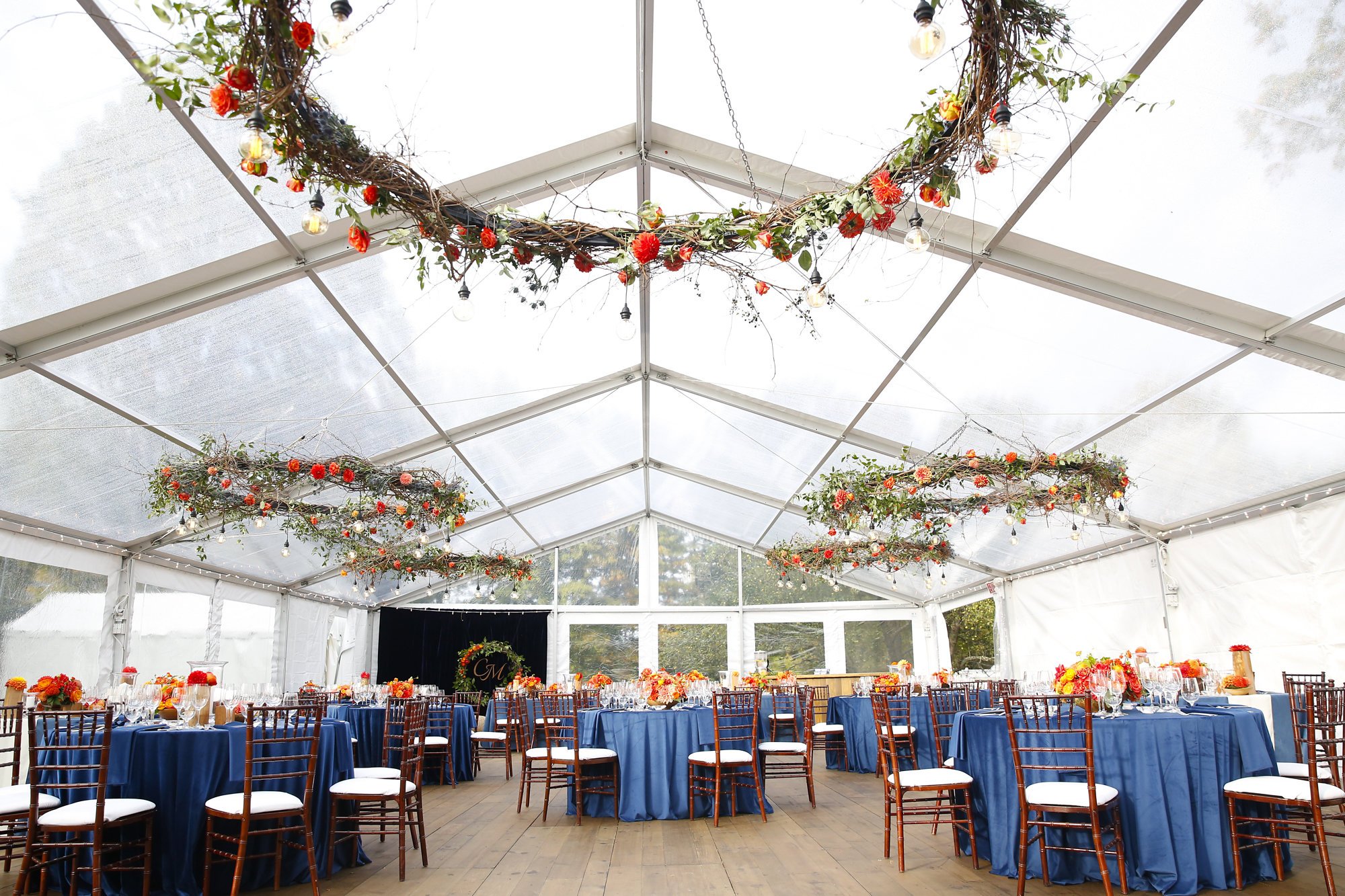
A private estate wedding in Vermont offers something only a few traditional venues can. That is the freedom to celebrate in a place that already means something to your family. For families with a second home in Vermont, hosting a wedding on the property can create an intimate, highly personal experience while taking advantage of the state's mountain views, historic homes, gardens, fields, and natural scenery.
It also comes with a different set of planning considerations.
When you host a wedding at a private property, you are effectively creating a temporary event venue. Everything from where the tent sits to how vendors access the property needs to be considered before the wedding day. The right planning process can make the experience feel seamless. Without it, seemingly small site issues can become significant logistical challenges.
How to Plan a Private Estate Wedding in Vermont
1. Start With a Thorough Site Assessment
Before choosing a tent or finalizing your wedding layout, assess the property itself.
A beautiful lawn does not necessarily make an ideal tent site. Vermont properties can have slopes, uneven ground, trees, narrow driveways, landscaping features, and other characteristics that affect what is possible.
When evaluating the property, consider:
Ground conditions: Is the proposed tent area level and suitable for installation?
Slope and drainage: Could rainwater collect around the tent or affect guest access?
Overhead obstructions: Are there trees, branches, power lines, or other structures near the proposed location?
Access: Can the installation team safely reach the site with the necessary equipment?
Driveways and gates: Are they wide enough for delivery vehicles and equipment?
Landscaping: Will the tent, stakes, equipment, or guest traffic affect gardens, lawns, or other features you want to protect?
The house and other structures: How will guests move between the tent, house, parking areas, and other parts of the property?
Utilities: Are there existing electrical connections or other infrastructure that needs to be considered?
Guest parking: Where will guests arrive and park, and how far will they need to walk?
Catering access: Can caterers conveniently move equipment and food between their vehicles and the event area?
This is one reason a professional site assessment is valuable when planning a private estate wedding in Vermont. The property should inform the event layout rather than forcing the property into a predetermined plan.
2. Think About Permitting and Property Requirements
A wedding on private property may still involve local requirements. The specific requirements can vary depending on the town, property, size and nature of the event, and services being provided. Before making final arrangements, check with the appropriate local authorities about whether permits, inspections, approvals, or other requirements apply.
Depending on the circumstances, you may need to investigate considerations involving the tent installation, fire safety, temporary structures, food service, alcohol, sanitation, parking, noise, or other aspects of the event.
Your tent rental company can help identify questions that should be considered during the planning process, but property owners should confirm applicable requirements with the relevant authorities.
It is much easier to address these questions early than to discover an issue shortly before your wedding.
3. Choose the Tent Location Before You Choose the Layout
Once you understand the property, you can begin determining where the tent should go.
The best tent location balances aesthetics with practical considerations. For example, you may want the tent positioned to take advantage of a mountain view or overlook, but that location also needs to work for installation, catering, guests, and other vendors.
Think about the experience from the moment guests arrive.
Where will they enter the property? Where will they park? How will they reach the tent? Will they walk across grass, gravel, or another surface? Where will the ceremony take place? Will guests move from the ceremony to cocktails and then into the reception? Where will the catering team work?
The tent itself is only one part of the overall event environment.
Your tent style also matters. For example, a sailcloth tent can complement the natural beauty of a Vermont estate, while a clear structure can provide a more contemporary feel and a different relationship with the surrounding landscape. The right option depends on the property's characteristics, your design goals, and the experience you want to create. A professional assessment can help determine which tent styles make sense for the site.
4. Plan Around Vermont's Landscape
One of the biggest advantages of hosting a wedding at a Vermont estate is the setting. Your property may already provide much of the visual character you want for the celebration.
The challenge is making the tent work with that setting.
Consider how the tent will look from the house, ceremony area, driveway, and guest arrival point. Think about sightlines as well as practical access. Trees, gardens, stone walls, lawns, and architectural features can all become part of the overall event design.
The landscape can also affect installation.
Uneven ground, slopes, limited access, and existing landscaping may influence where a tent can be placed and how the surrounding event area needs to be configured. These considerations are especially important for properties that were designed as homes rather than event venues.
5. Coordinate the Tent With Your Other Vendors
A private estate wedding often involves more moving parts than a traditional venue because there is no established event infrastructure waiting for you.
Your planner, caterer, florist, lighting team, entertainment, rental companies, and other vendors may all need access to the same property.
The tent should therefore be considered as part of the complete event plan.
For example, your catering team may need a practical route from their vehicle to the tent. A DJ or band may need appropriate power and space. Lighting may need to be incorporated into the tent design. Tables and chairs need to fit comfortably within the floor plan, while the dance floor and other event elements need to work with the available space.
If you are planning additional rentals such as tables, chairs, lighting, a dance floor, tent flooring, or other event equipment, determine how those elements will work together before the final layout is approved.
This is where having an experienced tent company involved early can make the planning process easier. Rain or Shine's approach is built around a highly personalized relationship, with clients working with one expert throughout the rental process rather than being passed between multiple contacts.
For a private estate wedding, that continuity can be particularly valuable because the tent is closely connected to the logistics of the property.
6. Think Through Power, Restrooms, Parking, and Guest Access
When you host a wedding on your property, you need to think beyond the tent itself.
A private residence may not have the infrastructure required for a large gathering. Depending on the event, you may need to plan for temporary restrooms, additional power, parking arrangements, lighting, and guest pathways.
Consider these questions early:
Where will guests park?
Will parking require attendants or signage?
How will guests get from parking to the event?
Are temporary restrooms necessary?
Where will vendors load in and unload?
Where will catering equipment be positioned?
Is additional power required?
How will guests navigate the property after dark?
What happens if rain makes a lawn or pathway difficult to use?
Where will deliveries and vendor vehicles be staged?
These details may not be the most exciting part of wedding planning, but they have a major effect on the guest experience.
7. Build a Weather Plan
A tent provides shelter, but a successful outdoor wedding requires planning for the conditions around it as well.
Rain can affect parking, walking paths, vendor access, and the condition of the ground around the event. Wind, temperature, and changing weather conditions can also influence how guests experience the property.
Think about the wedding as a complete outdoor environment. Your plan should account for how guests will move between areas and how vendors will operate if conditions change.
This is particularly important for a Vermont estate wedding, where the property's terrain and surroundings are part of the appeal but can also introduce logistical considerations.
8. Give Yourself More Time Than You Think You Need
Private-property weddings benefit from early planning.
Unlike a traditional venue, your estate may require several different decisions before the event can come together. Tent placement needs to be established. Vendors need to understand access. Rental equipment needs to fit the available space. Permitting and property requirements need to be investigated. Installation logistics need to be considered.
Starting early gives you time to make decisions based on the property rather than making compromises because the wedding date is approaching.
It also allows your tent company to understand the site and your priorities before the final installation plan is created.
Private Estate Wedding Planning Checklist
Use this checklist as you begin planning your Vermont property wedding.
1. Property and Site
Identify potential tent locations
Assess ground conditions and slope
Check for overhead trees, branches, utilities, and other obstructions
Confirm access for installation and delivery vehicles
Consider the impact on lawns, gardens, and landscaping
Plan guest parking and arrival routes
Consider guest pathways between the house, ceremony, and reception
2. Permitting and Logistics
Check with the appropriate local authorities about applicable requirements
Investigate fire and safety considerations
Confirm requirements related to food service, alcohol, sanitation, or other event services where applicable
Determine whether additional power is needed
Plan restroom facilities if necessary
Establish vendor load-in and load-out routes
3. Tent and Event Design
Choose the tent style based on the property and overall design
Determine the appropriate tent size
Plan the seating and dining layout
Allocate space for the dance floor
Coordinate lighting and other tent installations
Plan for catering and service areas
Consider flooring or other ground treatments where appropriate
4. Vendor Coordination
Share the site plan with your planner and key vendors
Coordinate catering access
Coordinate lighting and entertainment requirements
Confirm delivery and installation schedules
Establish who will be the primary point of contact for tent-related questions
Review the final event layout before installation
Make Your Vermont Estate Work for the Wedding You Have Imagined
A private estate can be an extraordinary place to celebrate a wedding. You have the freedom to create an experience around your family's property, your preferred aesthetic, and the landscape that brought you to Vermont in the first place. But the key is to start with the property itself.
When the site, tent, vendors, guest experience, and logistics are considered together, the planning process becomes much more manageable. Having an experienced tent professional involved early can also give you a knowledgeable resource who understands how the tent installation connects to everything happening around it.
Rain or Shine Tent & Events specializes in personalized tent rentals for private estates and destination weddings in Vermont and New Hampshire. Our company is intentionally boutique, providing the white-glove service and continuity of care that allow clients to work directly with one expert from the initial inquiry through setup.
If you are considering how to host a wedding on your property, start by discussing the property itself. We can help you think through the tent, site considerations, and rental logistics so you can build an event that feels at home on your Vermont estate.
Ready to start planning your private estate wedding in Vermont? Contact Rain or Shine Tent & Events to discuss your property and tent rental needs.