
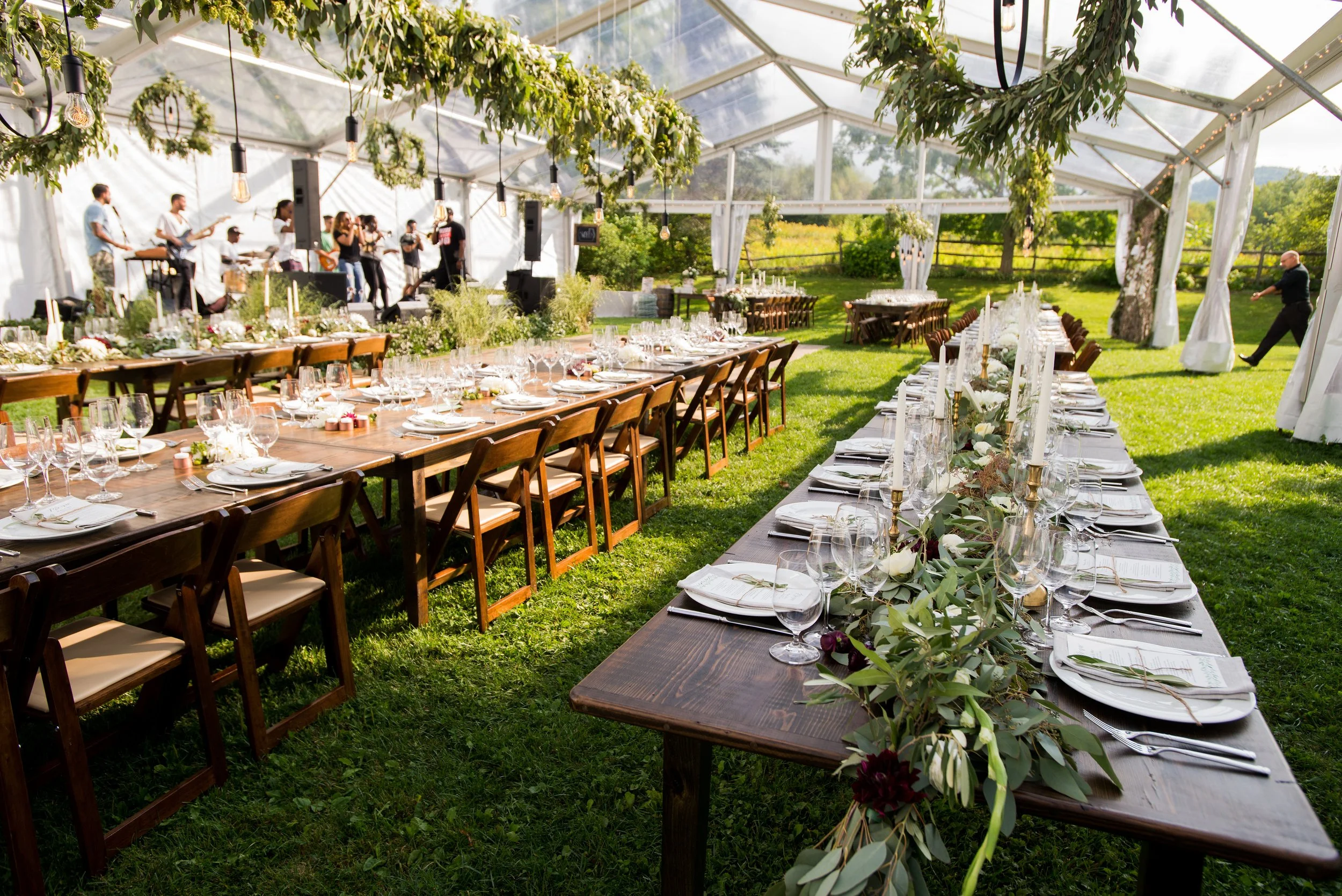
Vermont is one of the most sought-after destinations for outdoor weddings in the Northeast. Rolling farmland, mountain backdrops, covered bridges, and private estates create settings that almost any couple would dream of. But unlike traditional venues, outdoor weddings in Vermont require more planning - especially when it comes to your tent.
The right tent does not just keep guests dry. It defines the atmosphere of the entire event. And in Vermont, the terrain, climate, and character of each region call for different approaches.
This guide breaks down Vermont's key wedding regions by what they offer, what to watch out for, and how to choose a tent that fits - so you can plan your outdoor wedding with confidence and without surprises.
Why Vermont Is One of the Best Places for an Outdoor Wedding
Vermont's appeal is not just about scenery. It offers something increasingly rare: genuine privacy.
Many of the most memorable Vermont weddings happen not at a hotel or resort, but on a family's private property. A farm that has been in the family for generations. A second home overlooking a valley. A friend's estate with a barn and an open field.
That kind of setting creates a wedding that feels entirely personal. It also puts more responsibility on the couple and their vendors to create the infrastructure from scratch. That's where an experienced tent rental partner becomes essential.
Here is why Vermont consistently works so well for tented outdoor weddings:
Open, private land is abundant - especially in central and southern Vermont
The landscape is naturally photogenic in every season
Destination couples are drawn to Vermont's character, which elevates the overall experience
The wedding vendor ecosystem is strong, with experienced planners, caterers, and florists familiar with tented events
Vermont Wedding Regions: What to Know About Each Area
Vermont is a small state, but the experience of hosting an outdoor wedding changes significantly depending on where you are. Here is a quick overview of the primary regions Rain or Shine serves:
| Region | Best For | Terrain & Considerations |
|---|---|---|
| Woodstock & South Woodstock | Private estate and farm weddings, destination couples | Rolling hills, soft ground in spring, mature tree lines ideal for tent anchoring |
| Stowe & Morrisville | Mountain-view weddings, summer & fall events | Open meadows with mountain backdrops; wind exposure can be a factor. Sidewalls are recommended. |
| Upper Valley (Hanover, Lebanon) | Cross-border NH/VT weddings, venue-adjacent tenting | River valleys with level terrain and strong local planner networks |
| Northeast Kingdom | Remote estate weddings, intimate gatherings | Undeveloped land offers plenty of space but may require longer setup logistics and access planning |
| Champlain Valley (Burlington area) | Larger guest counts, corporate and social events | Flat terrain near the lake; permit requirements vary by town, so verify plans with your tent provider early |
Rain or Shine serves all of these regions and regularly works with private estates, farms, and event venues across Vermont and southern New Hampshire. If you are unsure whether your site falls within our service area, a quick inquiry is the fastest way to find out.
Woodstock & South Woodstock: Vermont's Premier Wedding Region
Woodstock is consistently one of the most requested areas for destination weddings in Vermont - and for good reason. The town itself is beautifully preserved, the surrounding countryside is stunning, and the density of private estates and family farms creates a strong inventory of outdoor wedding sites.
South Woodstock, just a few miles away, has been the setting for some of Rain or Shine's most memorable events. Events like the South Woodstock wedding we have captured in our gallery showcase exactly what is possible when a private estate is paired with the right tent and the right team.
What Makes Woodstock Work for Tent Weddings
Rolling terrain with natural elevation changes that create beautiful event landscapes
Established vendor networks - planners, florists, caterers, and photographers who know how to execute here
Strong demand for sailcloth and high peak tent styles that complement the natural setting
Proximity to the Upper Valley and easy access from Boston, New York, and Connecticut
What to Watch Out For in the Woodstock Area
Ground conditions vary. After a wet spring, even a flat field can be soft enough to require flooring
Access roads on some estates are narrow - always confirm truck access with your tent provider before booking
Foliage season creates high demand for September and October dates; book well in advance
Stowe & the Mountains: Drama, Views, and Weather Planning
Stowe's mountain setting makes for extraordinary wedding photography. Open fields with Camel's Hump or Mount Mansfield in the background create the kind of imagery that ends up in national wedding publications.
However, mountain weddings in Vermont require more weather planning than most. Wind exposure is real at higher elevations, and temperature drops faster in the evening than couples sometimes expect. The good news: with the right tent setup, none of that needs to be a problem.
Planning Tips for Stowe-Area Tent Weddings
Sidewalls are strongly recommended, even for summer events - wind can pick up suddenly at elevation
A heating plan should be part of every Stowe event from late August onward
Clear span structure tents can be a smart choice for exposed hilltop sites where pole tents face more wind load
The payoff is significant: mountain views from inside a glowing sailcloth tent at sunset are difficult to replicate anywhere else
The Upper Valley: Vermont's Best-Kept Wedding Secret
The Upper Valley - centered around Hanover, NH and White River Junction, VT - occupies a unique position. It straddles the Vermont-New Hampshire border, drawing couples from both states as well as destination guests from Boston and New York.
The Connecticut River valley provides relatively flat terrain and strong vendor infrastructure thanks to the Dartmouth community. It is also less saturated with wedding businesses than some other Vermont regions, which means your event feels more exclusive.
Rain or Shine regularly serves both the Vermont and New Hampshire sides of the Upper Valley, and our team understands the specific permitting and site preparation needs common to this area.
Choosing the Right Tent Style for a Vermont Venue
The venue and the region shape which tent style works best. Here is a quick comparison of the tent types Rain or Shine offers and where each tends to perform best:
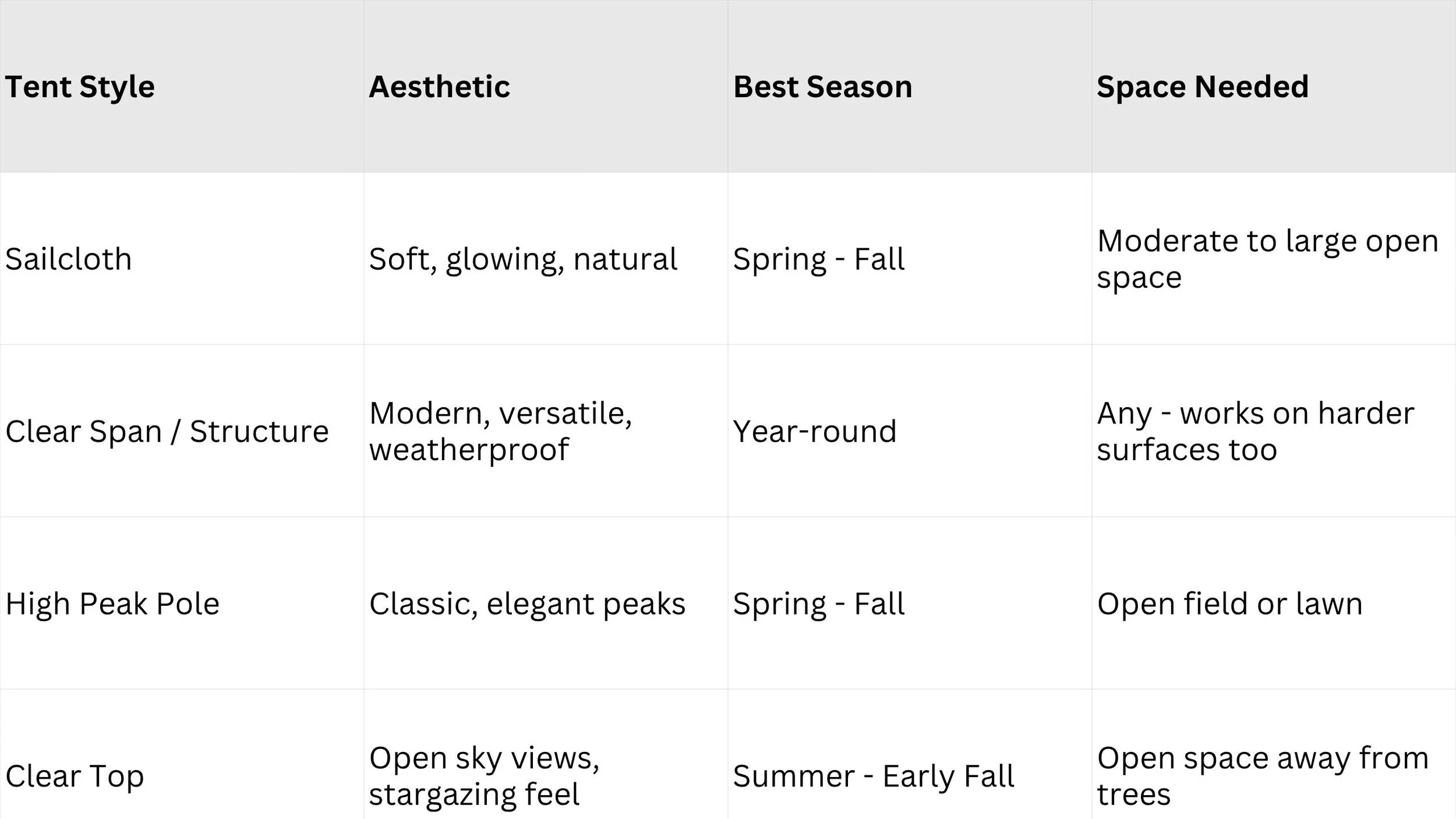
For a deeper look at how to choose between a sailcloth and a structure tent, see our dedicated guide:
Sailcloth Tent Rental Cost & Tips for Weddings in Vermont
Permits and Site Logistics: What to Check Before You Book
One of the most common surprises for couples planning outdoor weddings on private property in Vermont is discovering permitting requirements late in the planning process. These vary by town, and the rules are not always obvious.
Here are the most important items to check early:
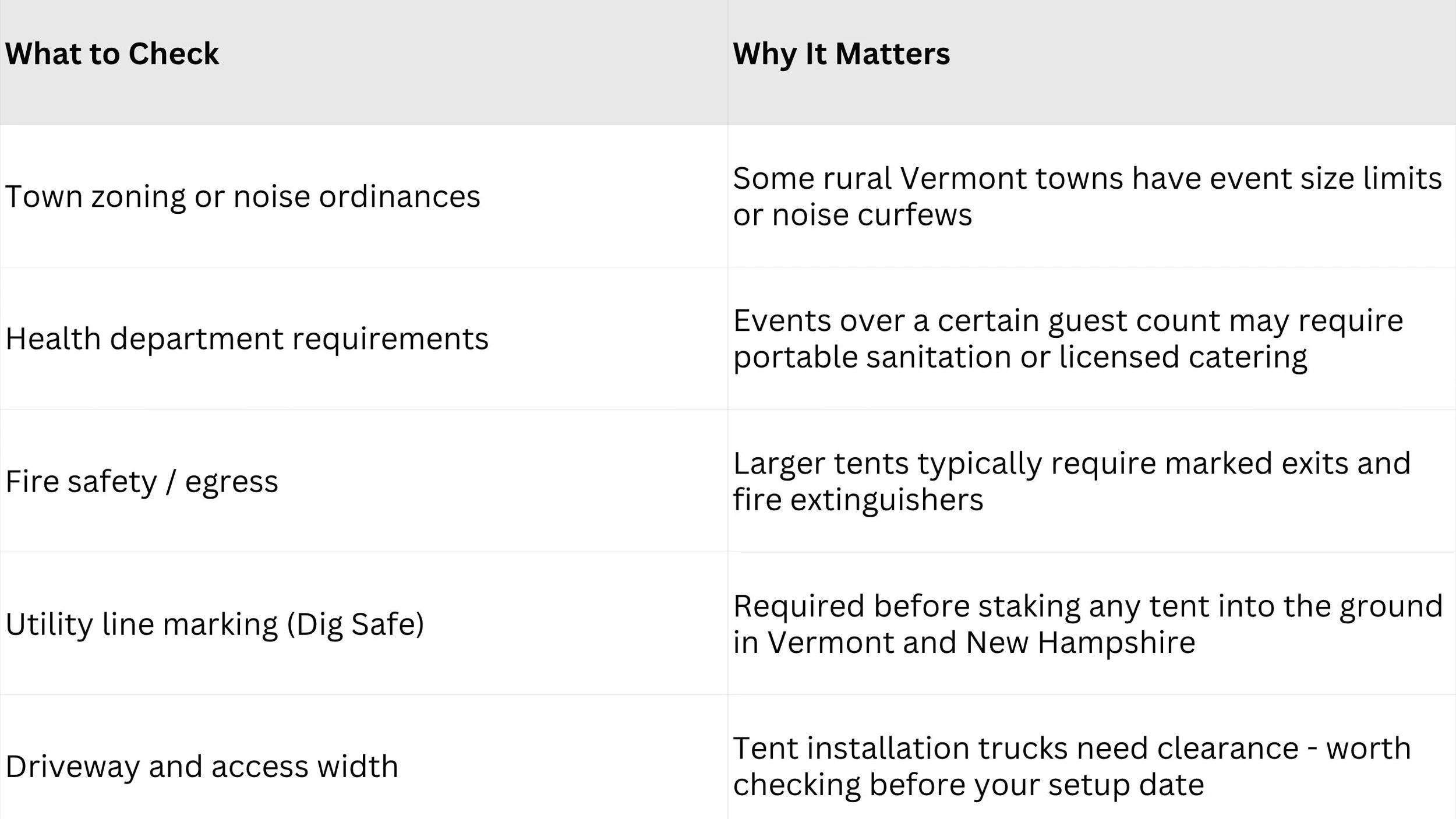
Rain or Shine works closely with couples and planners to identify potential site issues during the early planning phase. A site visit - which we offer as part of our process - is often the best way to catch these items before they become last-minute problems.
Vermont Outdoor Wedding Planning Checklist
Use this checklist to stay on track as you plan your Vermont tent wedding:
12+ Months Out
Confirm your property or venue can support a tent event
Request quotes from tent rental companies - peak season books early
Identify and book a wedding planner familiar with Vermont tented events
9-12 Months Out
Schedule a site visit with your tent rental company
Check with your town on permits and any event size restrictions
Confirm access road clearance for installation trucks
6-9 Months Out
Finalize tent style, size, and layout
Confirm flooring, lighting, and power needs
Book your full vendor team - photographers, caterers, florists
3-6 Months Out
Review weather contingency plans with your tent provider
Complete Dig Safe registration if required
Confirm heating and sidewall plans for shoulder-season events
1-3 Months Out
Finalize guest count and confirm tent capacity
Walk the site with your planner and tent team
Review setup timeline and breakdown schedule
Start Planning Your Vermont Outdoor Wedding
Every Vermont property is different. The right tent, the right placement, and the right planning approach depend on your specific site, guest count, and vision for the day.
Rain or Shine has been working with couples and families across Vermont and New Hampshire since 1986. Our team handles everything from initial site assessment to full setup and breakdown - so you can focus on the event itself.
Ready to see what your property could look like? Request a quote and our team will help you build a plan from the ground up.
Frequently Asked Questions
-
Woodstock and South Woodstock are consistently the most popular areas for luxury outdoor weddings in Vermont, thanks to the combination of private estates, mature landscapes, and a strong vendor network. Stowe is a close second for couples who want mountain views. The best region ultimately depends on your guest count, travel logistics, and the style of event you are planning.
-
No, you do not need a tent permit for an event held on private property. If your event is at a venue, then yes, you will need a tent permit for any event tent over 1200 sqft
-
Sailcloth tents are the most popular choice for Vermont estate weddings because they complement the natural landscape rather than competing with it. For more exposed sites, or for couples who want better weather protection, a clear span structure tent offers a more enclosed environment without sacrificing the elevated aesthetic.
-
For peak season dates - June through September - booking 9 to 12 months in advance is strongly recommended. Popular styles like sailcloth tents can book out quickly, especially in high-demand areas like Woodstock and Stowe. For fall and shoulder-season events, 6 months is generally sufficient.
-
Rain or Shine serves Vermont and southern New Hampshire, with a service radius of approximately 1.5 hours from our base in Randolph. This covers the full range of Vermont regions mentioned in this guide, including Woodstock, Stowe, the Upper Valley, the Champlain Valley, and the Northeast Kingdom. If you are unsure whether your site is within our area, reach out and we will confirm.
-
Look for a company with direct Vermont experience, a clear site visit process, and a single point of contact who will manage your event from inquiry to breakdown. Vermont's terrain, weather patterns, and permitting environment require specific knowledge. Ask about their process for handling unexpected weather, what is included in the base rental, and whether they subcontract or manage installation themselves.
-
Yes, with the right preparation. Flooring systems can level uneven terrain and protect guests from soft or wet ground. A site visit before booking allows the tent team to assess grade, drainage, and access - and to flag any conditions that might affect setup or cost. This is one of the most important reasons to work with a tent provider that offers a formal site review process.