
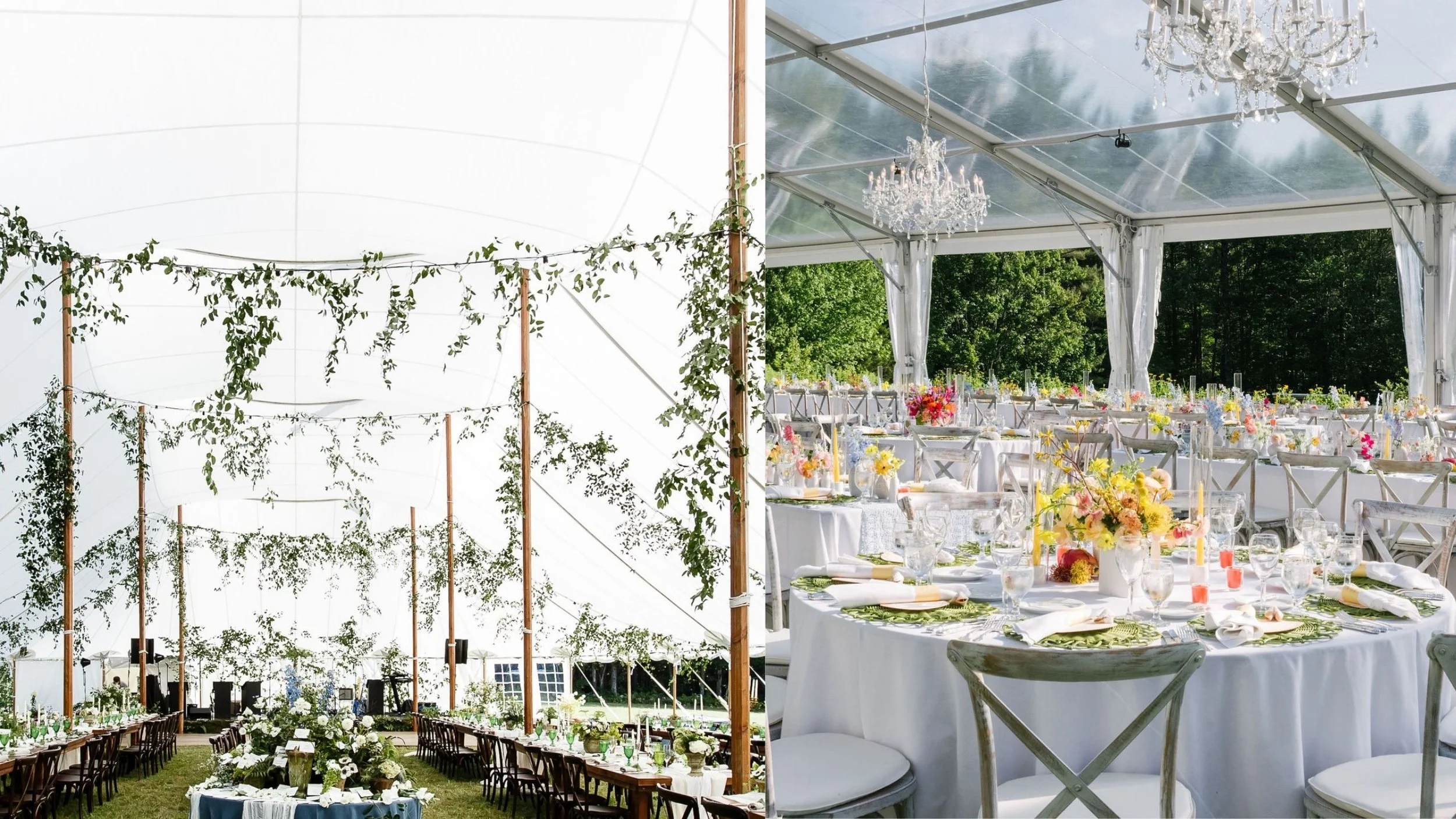
Choosing between a clear span tent and a sailcloth tent is rarely as simple as deciding which one looks better in photographs. Both can create an extraordinary setting for a Vermont wedding, but they offer very different experiences in terms of structure, light, atmosphere, site requirements, seasonality, and design.
Rain or Shine Tent & Events offers both styles for luxury weddings, private estates, and destination celebrations throughout Vermont and New Hampshire. Rather than recommending one tent universally, we look at the property, season, layout, access, and event design before determining what will work best.
Clear Span Tent vs. Sailcloth Tent: Side-by-Side Comparison
For couples wondering what type of tent is right for their wedding, the simplest answer is this: sailcloth tents are known for their soft, romantic profile and elegant peaked canopy, while clear span tents offer an open interior, clear tops, greater structural flexibility, and a more contemporary architectural feel. The right choice depends on the property, time of year, terrain, overall design vision, and guest experience you want to create. But let’s take a look at each of their features.
| Feature | Clear Span Tent | Sailcloth Tent |
|---|---|---|
| Overall look | Contemporary, architectural, open, dramatic | Romantic, soft, classic, elegant |
| Roof style | Clear top | Translucent sailcloth canopy |
| Interior poles | No center poles | Interior support poles are part of the design |
| Natural light | Excellent, with views of the sky through the clear roof | Soft, warm, diffused daylight |
| Evening atmosphere | Dramatic views of the sky, trees, and lighting | Warm glow beneath the translucent canopy |
| Site flexibility | Well suited to many complex layouts and site conditions | Best where adequate space is available for staking and anchoring |
| Uneven terrain | Can be considered as part of a customized site plan | Terrain, staking room, and grade all need careful evaluation |
| Seasonal use | Particularly useful for shoulder-season and cooler-weather events | Especially popular for warmer-season weddings |
| Heating | Can be enclosed and heated depending on the event plan | Heating may also be possible depending on setup and enclosure |
| Interior layout | Completely open floor plan | Support poles become part of the interior layout |
| Best suited for | Couples seeking a modern, dramatic, highly adaptable setting | Couples seeking a timeless, romantic tent that becomes part of the visual design |
What Is a Clear Span Tent?
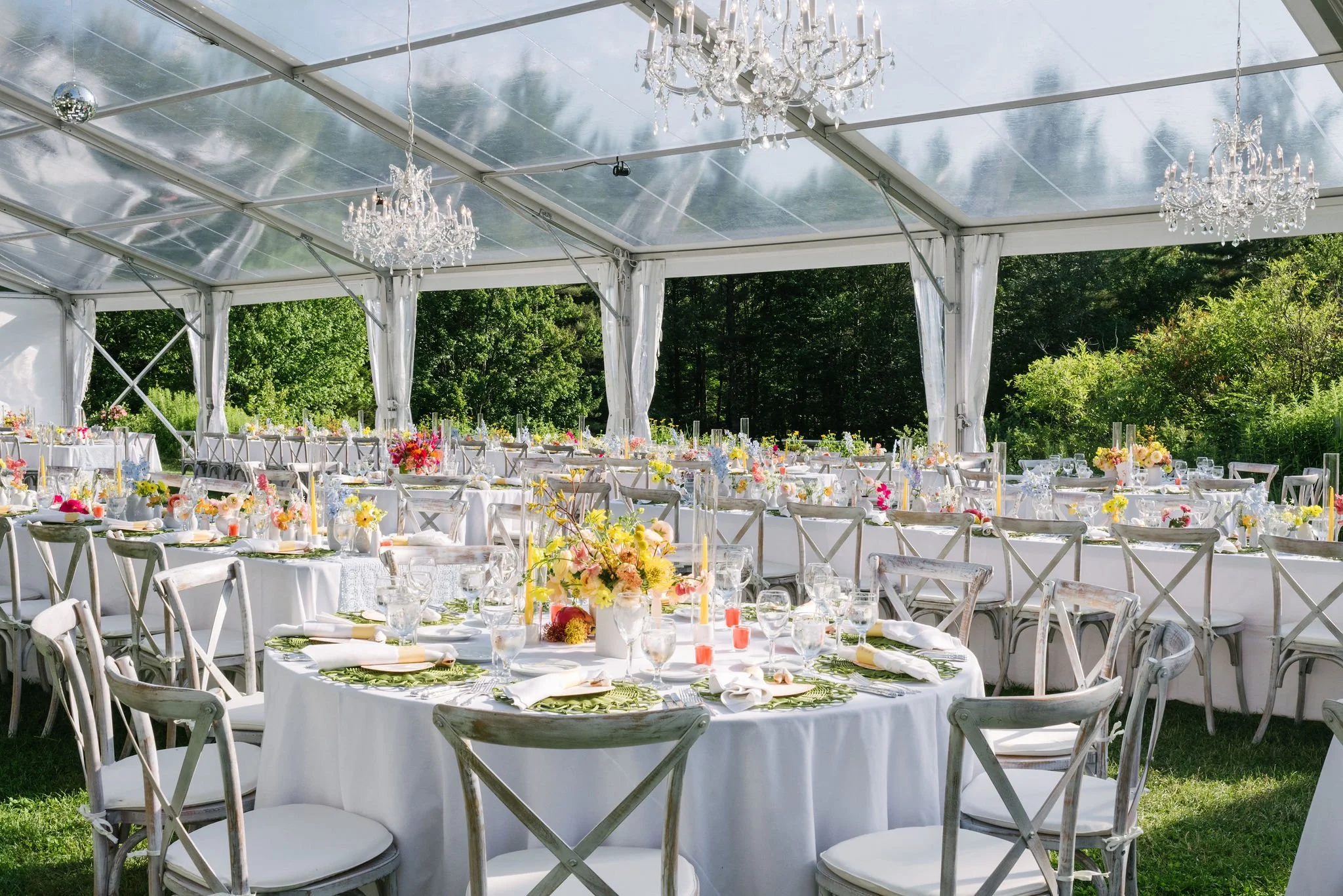
A clear span tent is a structure supported by an aluminum framework that eliminates the need for center poles inside the event space. At Rain or Shine, clear span tents can feature clear tops, creating an open view of the sky overhead.
For a daytime wedding, this allows natural light to pour into the space. As evening falls, the experience changes completely. Guests may see trees silhouetted against the sky, stars overhead, changing weather, or thoughtfully placed lighting reflected across the structure.
The uninterrupted interior also gives planners and couples considerable flexibility when designing the floor plan. Dining tables, bars, stages, lounges, dance floors, and other features can be positioned without having to work around center support poles.
Advantages of a Clear Span Tent for a Wedding
A clear span tent may be the right choice when you want:
An unobstructed interior without center poles
A clear roof with views of the sky and surrounding landscape
A modern or architectural aesthetic
Greater flexibility when planning complex interior layouts
A structure that can be enclosed for colder or shoulder-season celebrations
A tent solution that can be carefully adapted to a challenging property or event plan
One of the greatest benefits of a clear span tent wedding is that the structure can serve almost like a temporary venue. The open interior provides a blank canvas, while the clear roof keeps guests visually connected to the landscape outside.
Potential Considerations With a Clear Span Tent
The same transparent roof that makes a clear span wedding tent so visually striking also needs to be considered as part of the complete event design.
Direct sunlight, daytime temperatures, tree coverage, the time of the ceremony and reception, and the position of the tent on the property can all affect the guest experience. A clear top also creates a more modern visual presence than sailcloth, which may or may not align with the overall character of the wedding.
The structure itself can also feel more architectural. For couples seeking the softer, sweeping appearance of a traditional luxury wedding tent, sailcloth may feel more naturally aligned with their vision.
What Is a Sailcloth Tent?
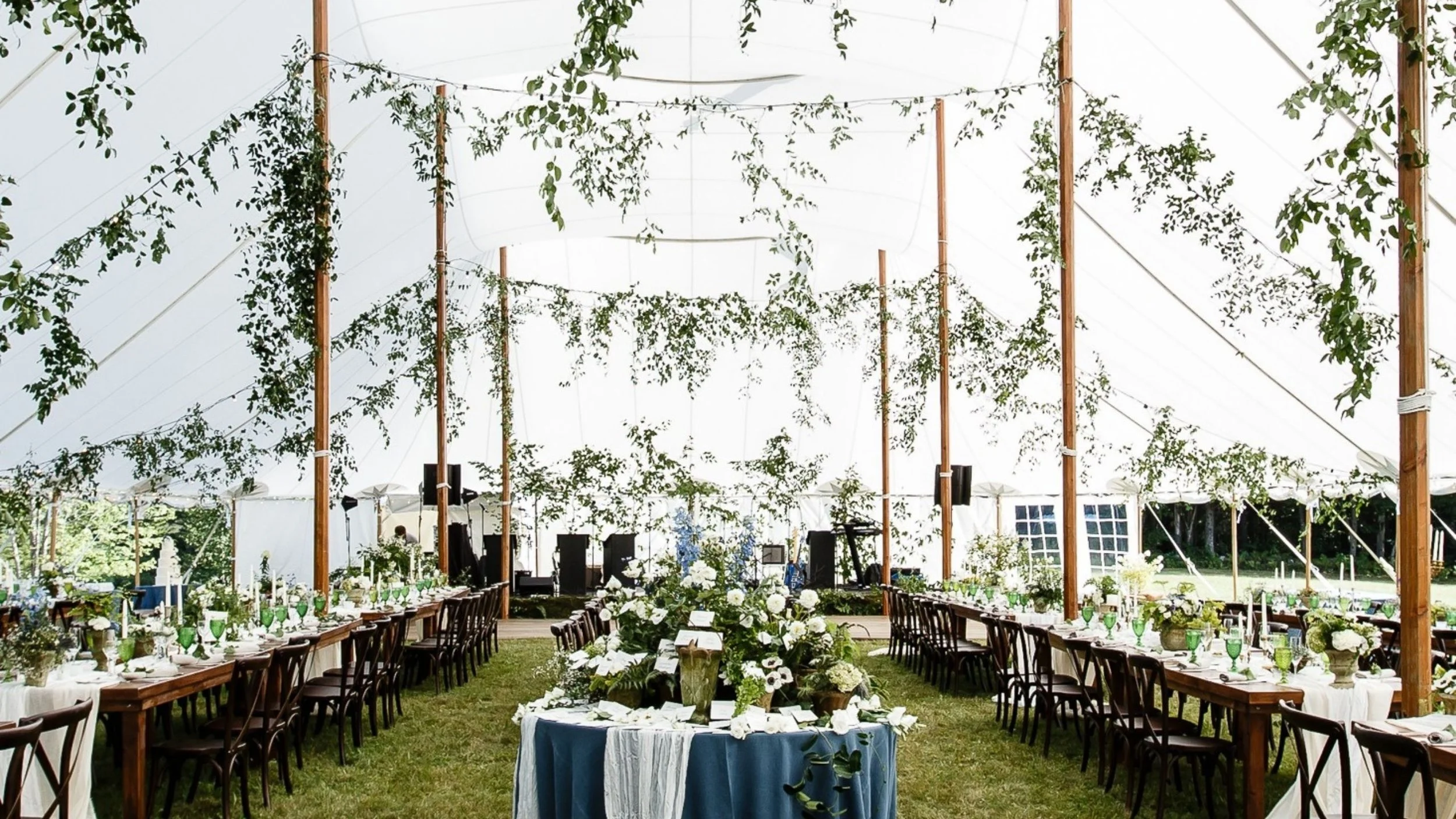
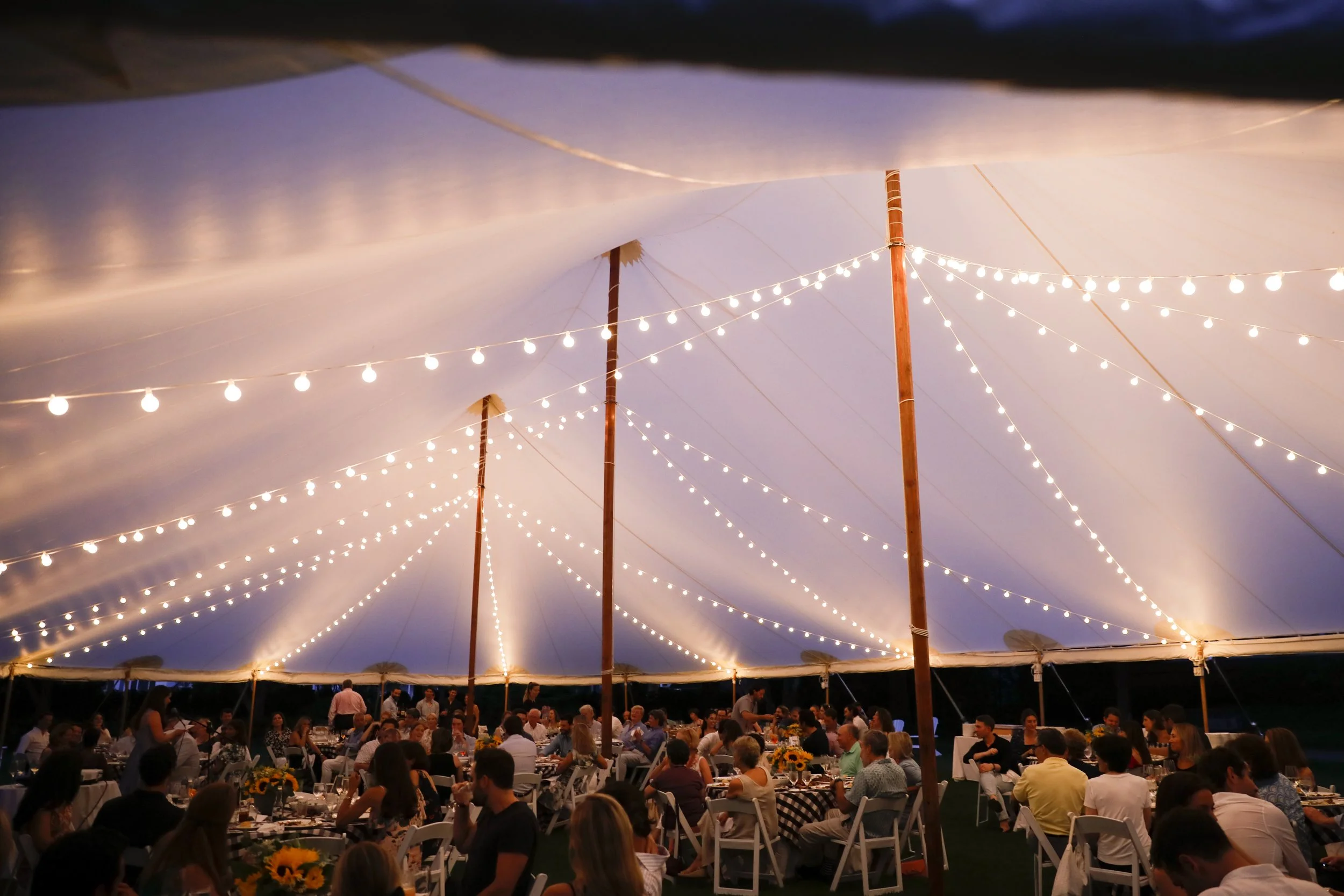
A sailcloth tent is defined by its sculpted peaks, graceful lines, supporting poles, and translucent fabric canopy. During daylight hours, the fabric softens the natural light. In the evening, interior lighting creates a warm glow that can make the entire tent appear illuminated from within.
Sailcloth tents are particularly well suited to private estates, open lawns, country properties, and outdoor settings where the tent itself is intended to become part of the visual identity of the wedding.
Rain or Shine's sailcloth tents are a signature part of its luxury wedding offering, although the company's approach is intentionally broader than any single tent style. Every recommendation is based on what makes sense for the specific property and event.
Advantages of a Sailcloth Tent for a Wedding
A sailcloth tent may be the right choice when you want:
A romantic, traditional luxury wedding aesthetic
Soft natural light during the day
A warm, glowing atmosphere after sunset
A tent that becomes a strong part of the visual design
Elegant peaks and sculptural rooflines
An outdoor wedding on a spacious estate lawn or property with suitable staking room
The support poles are not necessarily something to hide. In a well-designed sailcloth wedding, they can become part of the overall atmosphere and may be incorporated into lighting, florals, greenery, or the natural rhythm of the room.
Potential Considerations With a Sailcloth Tent
Sailcloth tents require thoughtful site planning. The property needs sufficient room for the tent itself as well as proper anchoring and staking. Trees, landscaping, underground utilities, stonework, slopes, access routes, and other property features can affect where and how the tent can be installed.
Interior poles also influence the floor plan. A skilled tent provider and event planner can design around them, but they still need to be considered when determining the placement of tables, dance floors, stages, bars, and sightlines.
For cooler-weather weddings, the complete enclosure and heating plan also deserves careful consideration.
Which Tent Is Better for a Vermont Estate Wedding?
For a large, open estate lawn, a sailcloth tent can create a particularly natural relationship with the surroundings. The peaked roofline, translucent fabric, and elegant silhouette can complement gardens, mountain views, historic homes, barns, and expansive lawns.
A clear span tent can also work beautifully on an estate, particularly when the couple wants a more contemporary design, an unobstructed floor plan, or the drama of a clear roof.
The better question is not simply, "Which tent looks best on an estate lawn?" It is, "Which tent works best with this particular estate?"
The answer depends on factors including:
The available footprint
Changes in elevation
Staking and anchoring requirements
Tree placement
Underground utilities
Access for installation equipment
Views you want to preserve
The position of the home and surrounding structures
The direction of sunlight
The season and expected temperatures
The desired reception layout
A tent should feel connected to the property rather than imposed upon it.
Which Tent Is Better for a Wooded Property?
Wooded Vermont properties can be extraordinary wedding settings, but they require careful site evaluation.
In these settings, neither clear span nor sailcloth should automatically be considered the better option. Tree placement, root systems, overhead branches, staking space, vehicle access, elevation changes, and the usable footprint all influence the decision.
A clear span tent may offer advantages when an open interior is essential or when the layout requires a highly customized structural approach. A clear roof can also create a striking visual relationship with surrounding trees.
A sailcloth tent may be equally beautiful in a wooded environment when adequate clear space exists for the tent and its anchoring requirements.
The final recommendation should be based on an actual evaluation of the property rather than a general rule.
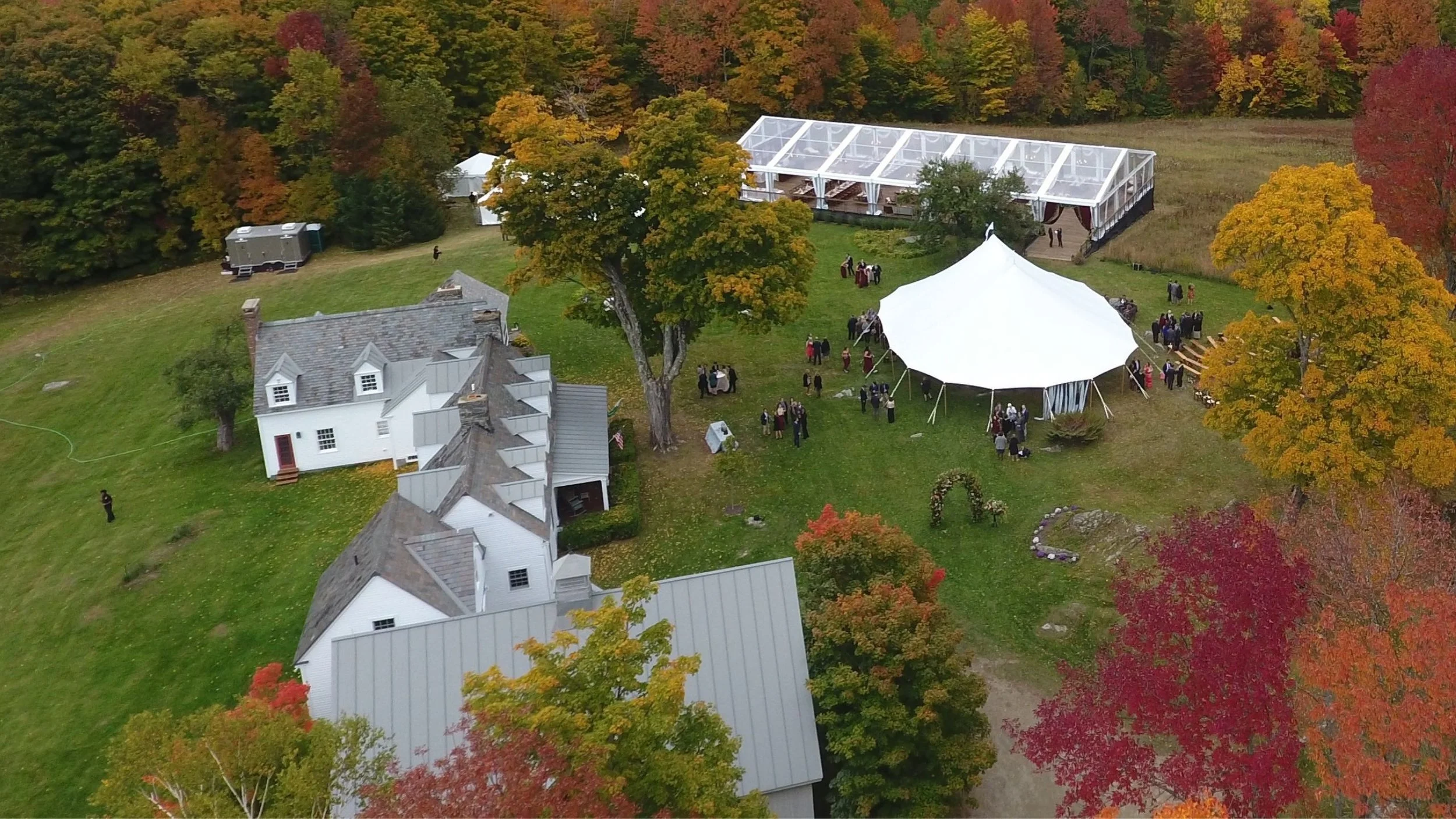
Is a Clear Span or Sailcloth Tent Better for Uneven Ground?
Uneven ground does not automatically rule out either tent style, but it does make professional site planning especially important.
Vermont properties often include slopes, rolling lawns, uneven grades, wooded areas, stone features, and other natural characteristics. A tent provider may need to consider flooring, decking, custom stairs, transitions, anchoring, and the overall relationship between the structure and the terrain.
The appropriate solution depends on the degree of the slope, the tent dimensions, access to the site, the event layout, and other property-specific considerations.
For this reason, choosing a wedding tent based on photographs alone can be misleading. A tent that works beautifully on one Vermont estate may not be the right structural choice for another property with a similar visual style but completely different terrain.
Which Wedding Tent Is Better for Summer, Fall, or Cooler Weather?
Summer Weddings
Both clear span and sailcloth tents can work beautifully for summer weddings.
A sailcloth canopy diffuses daylight and creates the airy, romantic appearance many couples associate with a classic Vermont summer wedding.
A clear span tent offers a different experience, with direct views of the sky and surrounding landscape. However, sun exposure, tent orientation, time of day, ventilation, and shade should all be considered when planning a clear-top wedding in warmer weather. This is because the summer heat in a clear span tent can be oppressive.
Early Fall Weddings
Early fall is one of Vermont's most visually spectacular wedding seasons. Both tent types can frame the landscape beautifully.
A clear roof may allow guests to see autumn foliage above and around the tent, while sailcloth creates a warm, elegant setting against the changing colors outside. The exact date matters. Vermont conditions can shift considerably as the season progresses.
Late Fall and Shoulder-Season Weddings
For cooler-weather celebrations, clear span tents can be particularly useful because they may be enclosed and incorporated into a broader heating and weather plan.
That does not mean sailcloth is automatically unsuitable. The correct approach depends on the date, weather expectations, sidewall configuration, heating plan, guest experience, and property.
For any Vermont wedding near the edges of the traditional outdoor season, weather planning should be part of the tent decision from the beginning rather than treated as a last-minute backup conversation.
Does Guest Count Determine Whether You Need a Clear Span or Sailcloth Tent?
Guest count does not by itself determine whether you need a clear span or sailcloth tent. There is no universal rule that says smaller weddings require sailcloth tents and larger weddings require clear span structures. Both styles may be available in different dimensions and configurations.
Guest count is only one part of determining tent size. You also need to account for:
Dinner service style
Table shape and size
Dance floor
Band or DJ area
Stage
Bars
Lounge furniture
Catering requirements
Cake or dessert displays
Entrances and exits
Circulation space
Weather contingencies
Two weddings with identical guest counts may require very different tent dimensions. For instance, a seated dinner for 150 guests with long farm tables, a large band, two bars, and lounge furniture requires a different footprint than a more minimal reception for the same number of people.
How Do You Choose Between a Clear Span and Sailcloth Tent?
When choosing between a clear span and sailcloth tent, start with the property and the experience you want guests to have. A sailcloth tent may be the stronger choice when the tent itself is meant to bring softness, warmth, and a timeless romantic character to the event.
A clear span tent may be the stronger choice when you want dramatic views overhead, an open floor plan, contemporary architecture, or additional structural flexibility.
For some weddings, the answer becomes obvious during the site evaluation. For others, both options may work, and the final decision comes down to aesthetic preference and how the tent fits into the broader event design.
Clear Span vs. Sailcloth: Which Tent Is Right for Different Wedding Scenarios?
A Summer Wedding on a Large Private Estate Lawn
Consider sailcloth for a romantic, classic appearance that complements an open lawn and becomes part of the overall wedding scenery.
Consider clear span when you want a contemporary feel, dramatic overhead views, or an unobstructed interior.
A Fall Wedding Surrounded by Vermont Foliage
Consider clear span when seeing the foliage and sky through the clear roof is central to the experience.
Consider sailcloth when you prefer a warm interior glow and want the surrounding autumn colors to frame the tent from outside.
A Wedding on a Wooded Property
Do not choose based on style alone. Tree placement, roots, overhead branches, staking room, access, and available footprint should determine which structures are realistically suited to the property.
A Late-Season Wedding in Vermont
Consider clear span when enclosure and heating are priorities.
Consider sailcloth when the conditions, setup, and weather plan make it suitable and its aesthetic remains central to the wedding vision.
A Wedding With an Elaborate Interior Floor Plan
Consider clear span when eliminating center poles gives the planner more freedom to position dance floors, stages, dining areas, bars, and lounge spaces.
Consider sailcloth when its poles and sweeping peaks are an intentional part of the desired atmosphere and can be incorporated naturally into the design.
Frequently Asked Questions
-
A clear span tent uses a structural framework that eliminates the need for center poles and can feature a clear roof. A sailcloth tent uses support poles and a translucent fabric canopy with distinctive peaks and flowing lines. Clear span tents tend to feel more modern and architectural, while sailcloth tents tend to create a softer, more romantic appearance.
-
The cost of a sailcloth tent depends on its size, location, installation requirements, event duration, flooring, lighting, sidewalls, heating, and additional rentals. Tent style alone does not determine the total wedding rental cost. A property requiring custom flooring, extensive access planning, additional installation labor, or other specialized work will affect the final proposal.
-
Sailcloth tents are designed for outdoor events and can provide shelter from rain when properly installed. However, every outdoor wedding requires a complete weather plan. Wind, storms, ground conditions, drainage, temperature, and other factors need to be considered as part of professional event planning.
-
Yes. A clear span tent can create an elegant wedding venue with an open interior and unobstructed floor plan. With a clear top, guests can remain visually connected to the sky, trees, and surrounding Vermont landscape.
-
Depending on the specific setup, clear span tents may be enclosed and incorporated into a heating plan for cooler-weather events. Tent size, outside temperature, enclosure, flooring, event duration, and other conditions all influence heating requirements.
-
The right wedding tent size depends on far more than guest count. Seating style, tables, dance floor size, entertainment, bars, lounges, catering areas, and circulation space all affect the required footprint. A customized floor plan is the most reliable way to determine the appropriate tent dimensions.
-
Neither tent is universally better. Sailcloth tents offer a romantic, softly lit atmosphere with elegant peaks, while clear span tents provide an unobstructed interior and dramatic clear roof. The property, season, terrain, layout, design vision, and weather plan should determine the best option.
-
In many cases, uneven ground can be addressed through careful site planning, flooring, decking, stairs, or other custom solutions. The feasibility depends on the grade, property, tent style, installation access, and event requirements.
Find the Right Tent for Your Vermont Wedding
The best wedding tent is not necessarily the one you liked first on Pinterest or the one that worked beautifully at another venue. It is the one that works with your property, your season, your design, and the way you want people to experience the celebration. The right tent should feel like it belongs on the property, not like it was simply placed there.
Are you planning a Vermont wedding and having a hard time deciding between a clear span tent and a sailcloth tent? Contact Rain or Shine Tent & Events to talk through your property, wedding date, layout, and vision.