
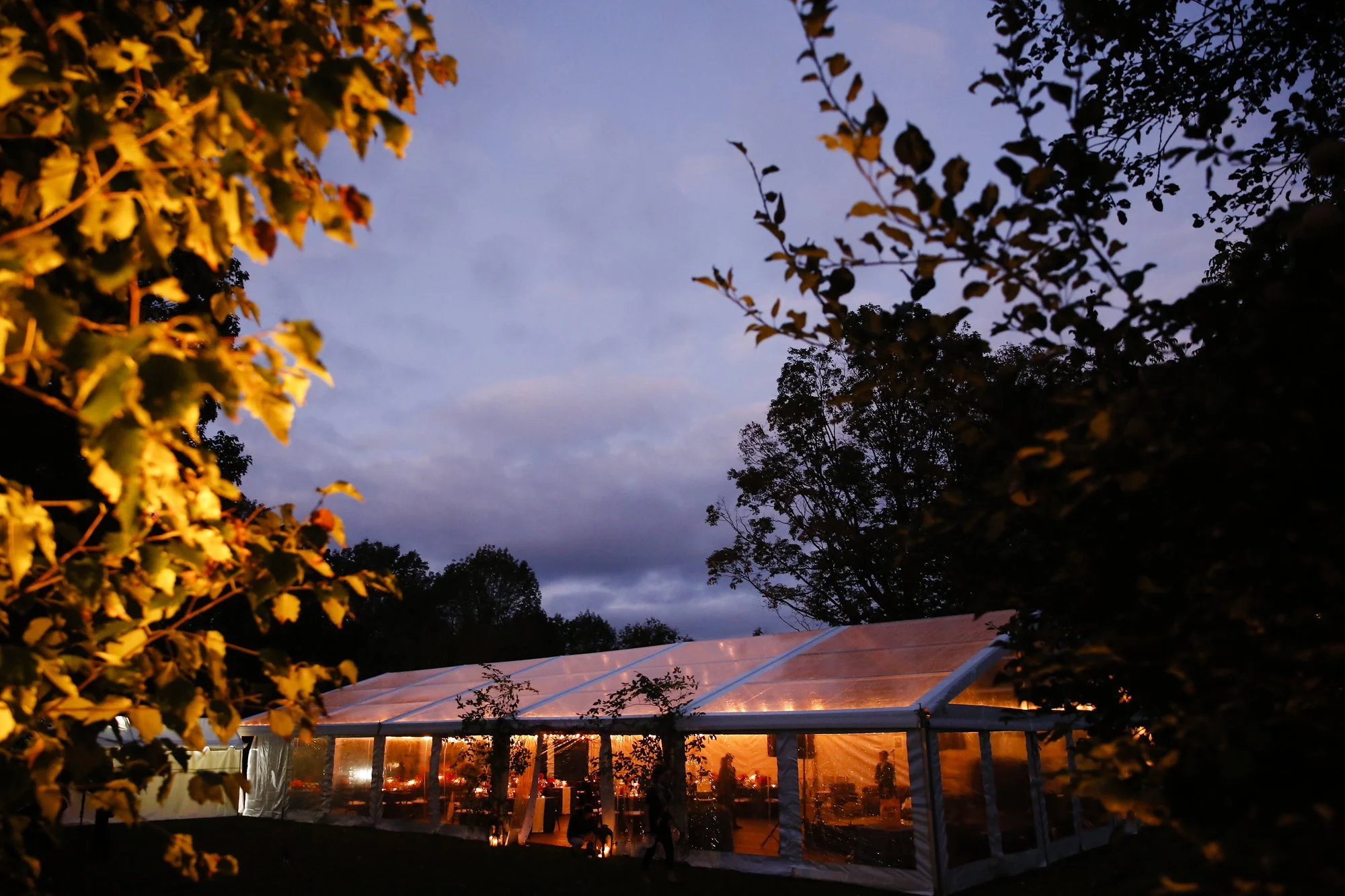
Vermont's fall landscape offers a spectacular setting for a wedding. The Green Mountains turn brilliant shades of gold, orange, and crimson. The air becomes crisp, and the countryside takes on a warmth that makes outdoor celebrations particularly memorable. For couples drawn to the beauty of autumn, a tented wedding offers an opportunity to enjoy the scenery while creating an intimate and personalized space for their guests.
However, planning a fall or winter tent wedding in Vermont requires more preparation than a typical summer celebration. Temperatures can drop quickly after sunset, autumn rain can leave the ground saturated, and early snow is possible in higher elevations. Fortunately, with the right tent structure, heating, flooring, and weather preparations, couples can host a comfortable and elegant celebration well beyond the traditional summer wedding season.
Whether you're considering a fall wedding Vermont tent celebration at a private estate, a countryside inn, or a scenic mountain property, understanding how to prepare for seasonal conditions will help you make informed decisions.
Why Choose a Fall Tent Wedding in Vermont?
For many couples, Vermont's foliage season is reason enough to plan an autumn wedding. From the rolling hills surrounding Woodstock to the mountain landscapes of Stowe, the state's natural beauty creates an extraordinary backdrop for ceremonies, receptions, and wedding photography.
An outdoor fall wedding in New England also offers distinctive design opportunities. Rich seasonal colors, textured fabrics, candlelit tables, and warm ambient lighting complement the surrounding landscape without requiring elaborate decorations.
A tent allows couples to make the most of these surroundings while creating a reception space tailored to their celebration. Depending on the tent style and weather conditions, open sides can frame the foliage during the afternoon, while sidewalls and heating help create a more sheltered atmosphere as evening approaches.
There are several reasons couples choose a tented fall wedding:
Seasonal scenery: Autumn foliage provides a naturally colorful backdrop for ceremonies and photographs.
Flexible locations: Tents can transform private estates, open lawns, and suitable countryside properties into wedding venues.
Personalized design: Couples can choose flooring, lighting, tables, seating, and decorative elements that complement their vision.
A cozy atmosphere: Warm lighting, thoughtful textiles, and seasonal florals create an inviting setting for guests.
The key is to plan the tent and its supporting infrastructure around the property, the guest count, and the conditions expected during the wedding.
How Cold Does Vermont Get During Fall Wedding Season?
September and October are popular months for Vermont weddings, but the weather can vary considerably depending on the location, elevation, and time of day.
A sunny September afternoon may feel comfortable for an outdoor ceremony, while an October evening in the mountains can become quite cold. November introduces a greater likelihood of freezing temperatures, and winter weddings require a more substantial approach to climate control.
The following temperature ranges are general planning estimates rather than forecasts for a particular wedding date.
| Month | Typical Planning Conditions | Tent Considerations |
|---|---|---|
| September | Mild afternoons, cooler evenings | Optional heating depending on location |
| October | Mild afternoons, cooler evenings | Heating and sidewalls often advisable |
| November | Colder weather, freezing nights possible | More substantial heating and weather protection |
| December to February | Freezing conditions, snow, and ice | Engineered winter-capable structures and specialized heating |
A tent wedding in October in Vermont can be particularly beautiful, but couples should plan for conditions after sunset rather than relying on the afternoon temperature.
For example, guests may be comfortable enjoying cocktails outdoors at 4 p.m. but need a heated reception tent by 7 p.m. The tent's heating system, entrances, and sidewalls should be planned with this temperature change in mind.
Heating a Wedding Tent in Vermont: What Are Your Options?
Heating is one of the most important considerations for a fall or winter tent wedding. A properly designed system can help maintain a comfortable indoor environment while allowing guests to enjoy the beauty of the season.
1. Direct-Fired Tent Heaters
Direct-fired heaters are the most common heating option for tented events. These are heaters in which the combustion exhaust is mixed with outside air to provide warm air inside the tent.
Because direct-fired heaters transfer heat efficiently, they are frequently used for wedding receptions, corporate gatherings, and other large tented celebrations. They can provide substantial warmth during chilly autumn evenings, helping maintain comfortable temperatures as outdoor conditions change.
For a heated wedding tent in Vermont, direct-fired heaters can be particularly useful for October and November receptions when temperatures may drop considerably after sunset. Depending on the tent's size and configuration, multiple heaters or strategically positioned air outlets may be needed to distribute warmth throughout the space.
Since combustion products enter the occupied space, proper ventilation, equipment sizing, and installation are especially important. A qualified event heating provider should evaluate the site and ensure that the system is approved for its intended use and operated according to the manufacturer's safety requirements.
2. Indirect-Fired Tent Heaters
Indirect-fired heaters are commonly used for larger tented events because they can deliver warm air into the tent while keeping combustion exhaust outside the occupied space. They typically use supply ducts to distribute heat and may require additional return-air ducts to circulate cooler air back to the heater.
Indirect-fired heaters can be particularly useful for larger receptions where maintaining comfortable temperatures throughout dinner, dancing, and evening activities is important. Depending on the equipment, they may also incorporate thermostatic controls to regulate heat output as conditions change.
For a winter or late-fall wedding in Vermont, the rental provider should assess the tent's dimensions, expected outdoor temperatures, sidewall configuration, air circulation, and potential heat loss before recommending an indirect-fired heating system.
3. Forced-air heating systems
Forced-air systems distribute heated air through ducts or vents to help maintain a comfortable temperature across the reception area.
Their effectiveness depends on the equipment, tent size, layout, and insulation characteristics. Larger structures may require multiple heating units or carefully positioned air outlets to avoid cold areas.
4. Supplemental heating for transitional spaces
Entrances, covered walkways, and adjoining hospitality areas may require additional attention because they are more exposed to outdoor temperatures.
Depending on the setting, professionally approved supplemental heaters may be appropriate. All heating equipment should be installed according to manufacturer requirements, fire safety regulations, and applicable local rules. Portable household heaters, open flames, and improvised heating arrangements should never replace a properly designed event heating system.
How Much Heating Does a Wedding Tent Need?
There is no universal heater size suitable for every tent. Heating requirements depend on several factors, including:
Tent dimensions and ceiling height
Expected outdoor temperatures and wind exposure
Number of guests
Sidewall and entrance configurations
Flooring and ground conditions
Desired indoor temperature
Equipment placement and available power or fuel
A large reception tent in an exposed mountain meadow will have different heating needs from a smaller tent on a sheltered estate lawn. Working with an experienced tent rental team early in the planning process allows these details to be considered before the final equipment selection.
Choosing the Right Tent Flooring for Fall and Winter Weddings
Flooring is another essential part of a successful cold-weather tent wedding. While grass may be suitable for certain summer events, wet or frozen ground introduces additional challenges.
A carefully selected flooring system helps create a more stable surface for guests, protects the event layout from changing ground conditions, and contributes to the overall appearance of the reception.
Ground-level event flooring
Modular flooring can create a more consistent walking surface over suitable, relatively level ground.
It may be appropriate for early fall weddings where the site has good drainage and limited elevation changes. However, the ground must still be assessed for softness, standing water, and other potential issues.
Raised tent flooring and decking
For properties with uneven or soft ground, raised flooring or engineered tent decking may provide a more suitable solution. A professionally installed deck can help create a level event surface and reduce direct contact with wet ground. Depending on the system, it may also accommodate modest changes in elevation.
Raised flooring can be particularly valuable for private estate weddings, where the most scenic tent location may not have perfectly level terrain.
Finished flooring and dance floors
Once the structural flooring requirements are addressed, couples can consider decorative finishes that complement the wedding design. Wood-look flooring, carpeted surfaces, and dedicated dance floors can help define different areas of the reception.
For an autumn wedding, warm wood tones can pair beautifully with seasonal florals, natural linens, and soft lighting.
What About Frozen Ground?
Frozen ground creates additional installation considerations. Stakes may be difficult to drive, the soil may shift during freeze-thaw cycles, and snow or ice can affect access to the installation site. A professional tent provider should assess the ground conditions and determine whether the planned anchoring and flooring systems are appropriate.
A tent floor does not automatically solve drainage, stability, or frost-related problems. These issues need to be evaluated before installation, particularly for late fall and winter events.
Preparing for Rain, Mud, and Wind
Autumn weather in Vermont can change quickly, especially in mountainous areas. A successful outdoor wedding plan should account for more than rain on the wedding day. Conditions during the days leading up to the event can affect installation, delivery access, and ground stability.
Managing rain and muddy conditions
A tent provides overhead shelter, but water can still become a concern if the installation site has poor drainage or runoff from nearby slopes.
Before choosing a tent location, consider how water moves across the property during heavy rainfall. Low-lying areas, natural drainage paths, and ground that remains soft after rain may require a different layout or additional site preparation.
For a private estate wedding, a site assessment should also consider delivery routes and guest pathways. Even with a beautifully finished reception tent, guests may need to cross wet grass between the ceremony, cocktail area, restrooms, and parking.
Temporary walkways, suitable flooring, and thoughtful placement of event facilities can help make the entire experience more comfortable.
Planning for wind
Wind is another important consideration, particularly on exposed hillsides and open fields. Professional event tents are engineered for specific installation conditions and must be secured using appropriate anchoring systems. The correct approach depends on the tent design, ground conditions, and manufacturer's requirements.
Sidewalls can provide additional protection from wind and help retain heat, although they also affect the forces acting on the structure. Their use must be considered as part of the overall tent installation.
Couples should discuss weather monitoring and emergency procedures with their tent provider and wedding planner well before the event. A tent's ability to withstand certain conditions does not mean an event can safely continue during every storm.
Preparing for snow and ice
Winter weddings introduce considerations beyond those of a typical October celebration. Snow accumulation can place substantial loads on a tent roof, while ice can create hazards around entrances and walkways. Not every wedding tent is designed or approved for winter use.
A winter tent wedding should therefore begin with confirmation that the proposed structure is suitable for the anticipated snow, wind, and temperature conditions.
Snow management, emergency access, heating, and safe guest circulation should all be included in the planning process.
Which Tent Style Is Best for a Fall or Winter Wedding?
The right tent depends on the desired aesthetic, property conditions, guest count, and anticipated weather.
Rain or Shine Tent & Events offers several tent styles suited to different event designs, including sailcloth, frame, and clearspan structures. Each offers distinct advantages, although seasonal suitability must be evaluated for the particular installation.
Sailcloth tents for an elegant autumn setting
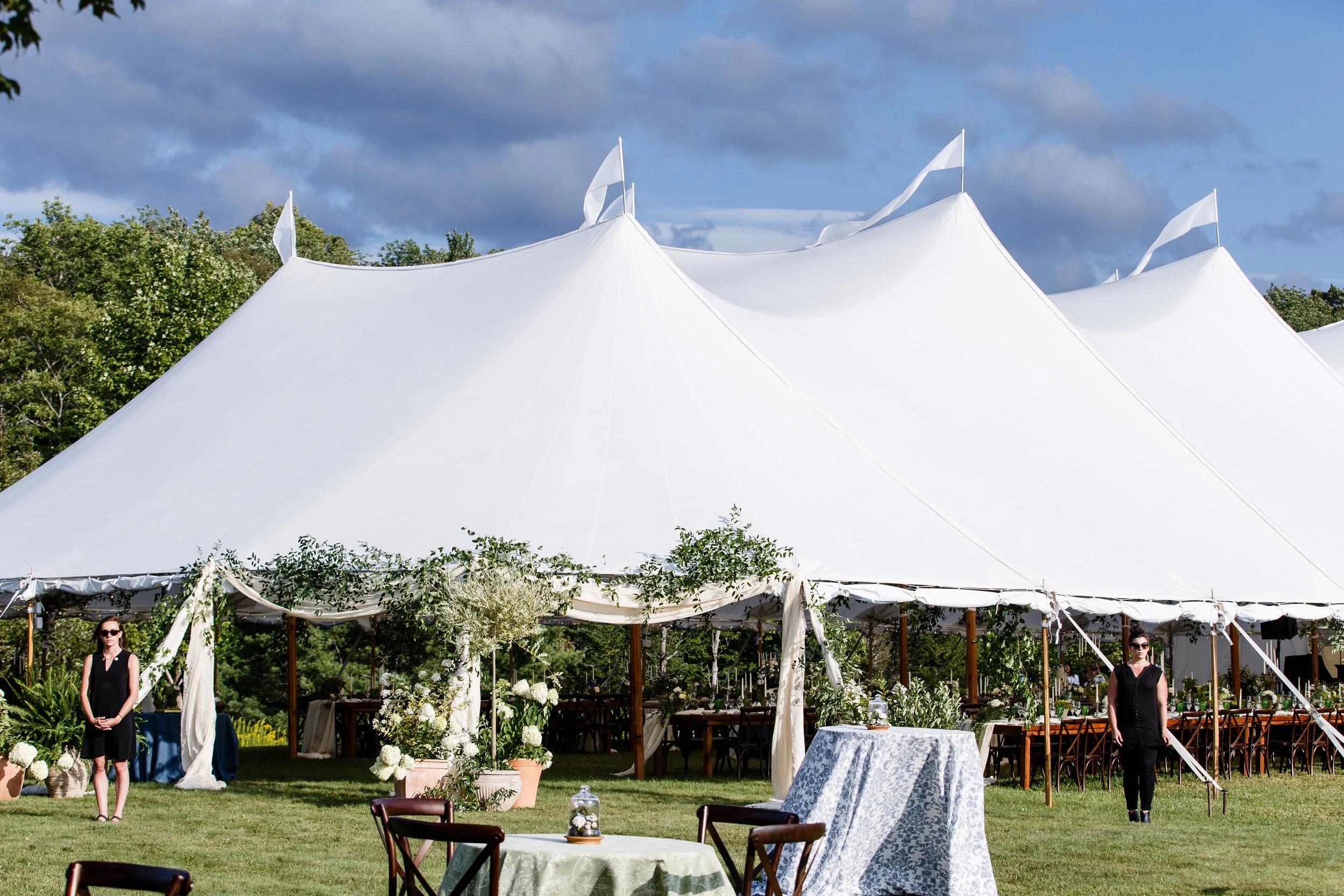
Sailcloth tents are especially appealing for couples who want a romantic, open atmosphere. Their sweeping peaks and translucent fabric create a graceful silhouette that complements Vermont's countryside. During daylight hours, the fabric allows soft natural light to filter into the reception space. In the evening, warm lighting can illuminate the canopy and create an inviting glow.
However, couples planning colder celebrations should discuss sidewall availability, heating compatibility, anchoring, and seasonal limitations before selecting this style.
Clearspan tents for flexible layouts and more enclosed environments
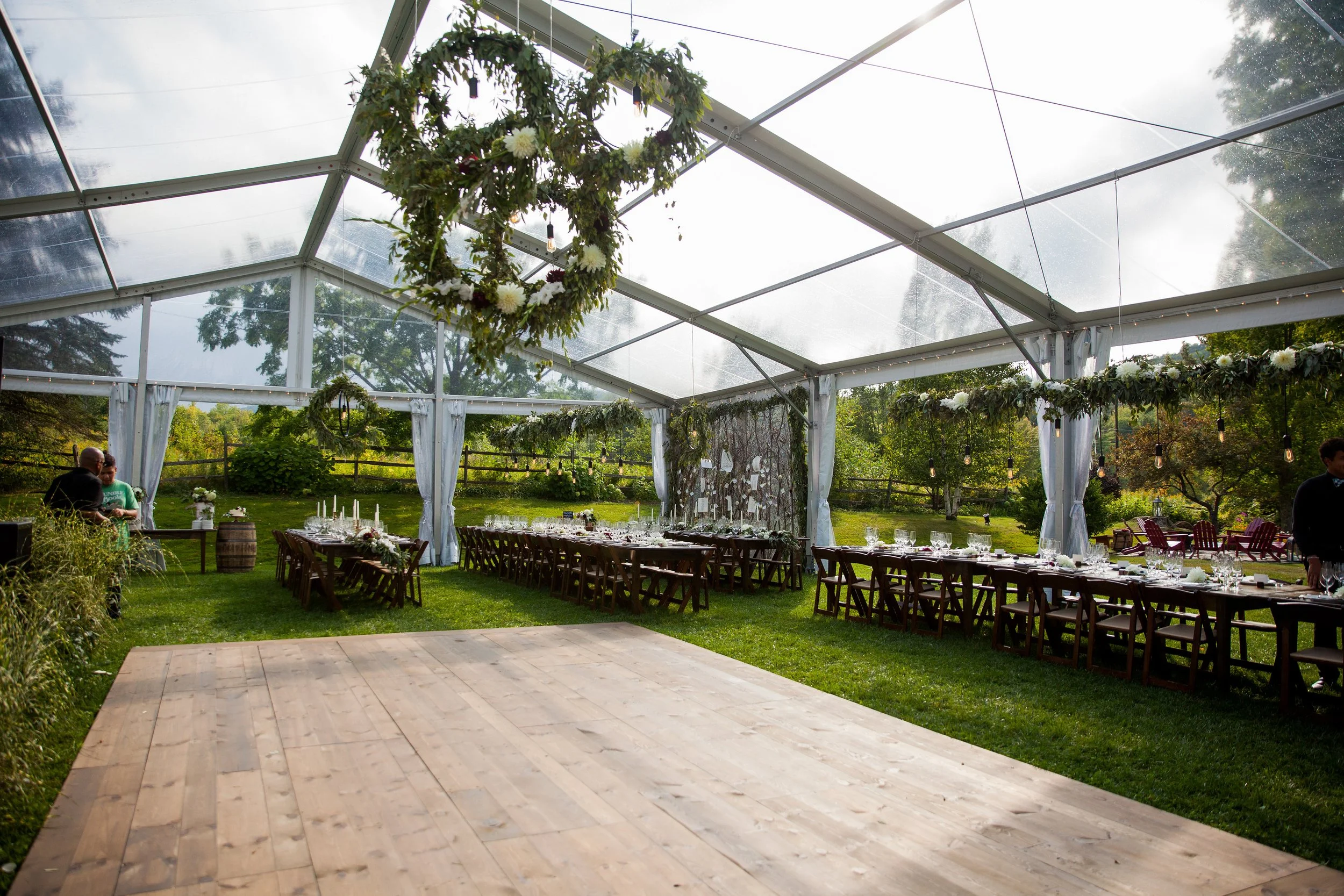
Clearspan structures provide unobstructed interior space without the center poles commonly found in traditional pole tents. This makes them especially versatile for larger receptions, custom floor plans, and elaborate event designs.
Depending on the structure and available enclosure options, they can accommodate more substantial climate-control arrangements.
For a late autumn wedding, a clearspan structure may be worth considering when the priority is a more enclosed reception environment. Winter use still requires a structure specifically rated and installed for the expected conditions.
Frame tents for versatile event spaces
Frame tents offer another option for properties where interior flexibility is important. Without center poles, they can accommodate a variety of seating arrangements, dance floors, and catering layouts. Depending on the specific system, they may also work well with sidewalls and professionally designed heating.
The final choice should reflect the installation site and seasonal requirements rather than appearance alone.
Fall Tent Wedding Ideas: Creating a Warm and Elegant Atmosphere
The beauty of a fall wedding in Vermont lies in the opportunity to bring the colors and textures of the landscape into the reception design. Some of the most memorable fall tent wedding ideas combine natural materials with carefully selected lighting and furnishings.
Embrace the colors of Vermont's foliage
Deep burgundy, burnt orange, copper, forest green, and warm neutrals complement the autumn landscape. These colors can appear in floral arrangements, table linens, place settings, and decorative accents.
For a more understated design, ivory linens, natural wood, and muted greenery allow the surrounding foliage to remain the visual centerpiece.
Use lighting to create warmth
As daylight fades earlier in autumn, lighting becomes an important part of the reception experience. Warm string lights, chandeliers, and carefully positioned accent lighting can transform a tent after sunset. Lighting can also emphasize the tent's architectural features, from the sweeping peaks of a sailcloth canopy to the clean lines of a clearspan structure.
A lighting plan should include functional illumination for entrances, walkways, catering areas, and restrooms, as well as decorative lighting inside the tent.
Incorporate seasonal textures
Wooden farm tables, layered linens, upholstered seating, and natural floral arrangements can help create a welcoming autumn setting. For a wedding on a private estate, these details can also connect the temporary event space to the property's existing architecture and landscape.
Create inviting gathering areas
A lounge area with comfortable seating can offer guests a place to relax between dinner and dancing. For larger weddings, separate spaces for cocktails, dining, and entertainment can make the event feel more intimate.
If outdoor gathering areas are planned, their use should remain flexible according to the weather. Fire features or supplemental heating should only be included where they are permitted and can be operated safely.
Planning a Fall Wedding at a Private Estate in Vermont
Private estates offer exceptional opportunities for fall weddings, particularly for families with second homes in Vermont. A property overlooking the mountains or surrounded by mature maple trees may provide a beautiful setting, but turning that location into a fully functioning wedding venue requires careful coordination.
The planning process should begin with a professional site assessment.
Assess the property before finalizing the layout
The most scenic location is not always the most practical place to install a tent. The assessment should consider ground conditions, slopes, drainage, vehicle access, overhead obstacles, underground utilities, and the space needed for anchoring. There must also be sufficient room for catering operations, restrooms, guest circulation, and other event infrastructure.
Plan the complete guest experience
For a fall wedding, comfort extends beyond the reception tent. Consider where guests will arrive, how they will move between event areas, and whether pathways will remain accessible in wet or cold conditions. Parking, lighting, restroom access, and transportation should all be part of the site plan.
Coordinate heating, flooring, and power early
Heating equipment may require dedicated fuel supplies or electrical infrastructure. Lighting, catering equipment, entertainment systems, and other event services also contribute to the overall power requirements.
Determining these needs early can help avoid last-minute changes to the layout or equipment plan.
Work with one experienced point of contact
Coordinating a tented wedding involves numerous interconnected decisions, and a change to one element can affect several others.
Rain or Shine's approach provides couples and families with a consistent point of contact throughout the tent rental process. Working directly with us from the initial conversation through installation helps maintain continuity as the design and logistics come together.
For families planning a destination wedding from outside Vermont, this personalized approach can be especially valuable.
Fall and Winter Tent Wedding Planning Checklist
Use this checklist when preparing for a September, October, November, or winter celebration.
Frequently Asked Questions About Fall and Winter Tent Weddings in Vermont
-
Yes. October can be a beautiful time for a tented wedding in Vermont, especially during foliage season. However, couples should plan for chilly evenings, rain, and the possibility of frost. A suitable tent with appropriate sidewalls, heating, and flooring can help create a comfortable reception environment.
-
Yes. Many professional event tents can accommodate heating systems designed for temporary structures. The appropriate equipment depends on the tent's size, enclosure, location, and expected temperatures. A qualified provider should determine the heating requirements and arrange safe installation.
-
Flooring is highly recommended when the ground may be wet, soft, uneven, or frozen. The right system depends on the site's condition and the type of event. Raised flooring or tent decking may be appropriate for certain properties, while simpler flooring systems may work on stable, well-drained ground.
-
Sailcloth tents can be suitable for some October weddings, depending on the location, weather, and available enclosure and heating options. Their suitability should be evaluated with the rental provider, especially for exposed sites or celebrations extending late into the evening.
-
Winter tent weddings are possible in certain circumstances, but they require specialized planning. The structure must be appropriate for anticipated snow and wind loads, and the event must have suitable heating, flooring, access, and snow-management arrangements. Some tent styles and locations may not be suitable for winter installation.
Plan Your Vermont Fall Wedding With Rain or Shine Tent & Events
A fall tent wedding in Vermont brings together beautiful scenery, thoughtful design, and the opportunity to celebrate in a setting that feels entirely your own. With careful attention to heating, flooring, tent selection, and weather preparation, couples can create a welcoming reception space that embraces the season.
At Rain or Shine Tent & Events, we specialize in personalized tent rental experiences for weddings, private estates, and destination celebrations throughout Vermont and nearby New England communities. From selecting the right tent style to coordinating the details of installation, our team works closely with you to bring your vision to life.
Whether you're planning an intimate autumn gathering near Woodstock or a larger celebration in the Stowe area, we're here to help you explore the possibilities. Let’s talk.